In response to the tariff attack, we all want to “buy Canadian” wherever we can. Even the Canadian Association of Petroleum Producers reminds us of the deep dependence that the rest of the country (and the US) has on the existing production from Alberta oil sands. Recently, CAPP has taken a position against counter-tariffs and – probably – some hope that the unprovoked pressure on the Canadian economy will just go away. Interestingly, they also counsel against the recent federal regulations for oil and gas sector GHG emissions. Is it simply an emissions cap or intervention into provincial jurisdiction? “It is CAPP’s view the federal government’s approach will directly limit Canada’s oil and natural gas production”.Tariffs and emissions caps combine for an inconvenient storm over the oil patch. Maybe there are limits? What else is left? We have to cut emissions but we can’t just keep it in the ground, right?
The Canadian oil and gas industry, instead, continue to turn to the claim that improvements in extraction technology can help reduce greenhouse gas (GHG) emissions and help position Canada’s oil as a “cleaner” alternative to other sources. However, oil extraction in Canada, particularly from the oil sands, remains among the most carbon-intensive energy resource in the world (!). The overall GHG emission will not go down when production increases. This issue has become pressing due to increasing demands from global climate commitments, regulatory limits, and most recently, implications of the tariff threat. Let’s take a look at the sustainability claims head on and assess the new regulatory efforts, industry advancements, and ongoing environmental challenges.
The Carbon Intensity of Canadian Oil is NOT Getting Any Better.
Despite claims made by the energy sector and suggested improvements in emissions intensity, the overall GHG emissions from the Canadian oil sands has continued to rise year over year (while emissions from other sectors are going down). The oil and gas sector was responsible for 31% of Canada’s GHG emissions in 2022 (most recent data), amounting to 217 megatons of CO2 equivalent (Government of Canada, 2024).

The Canadian government released the proposed Oil and Gas Sector Greenhouse Gas Emissions Cap Regulations in November, 2024 confirming the government’s intent to introduce a cap and trade system. The regulatory framework tries to cap the emissions and balance that with some allowance for continued production growth. This means we will continue to hear a lot about emissions intensity in oi production. (Government of Canada, 2023). Emissions intensity is the formula that each addition barrel of oil produced is associated with less CO2 emissions. Production could increase as long as GHG emissions associated are reduced.
Of course, this doesn’t completely make sense because absolute emissions can stay the same and oil production can continue to rise and mute out all the advances other sectors in Canada are making to decrease emissions. And the data over passed years shows that the amount of Alberta oil production increases in lock step with increases in GHGs from the oil patch. The data is super clear.
In context of the international standing, Canada was ranked as the fourth-largest oil producer in the world, contributing significantly to global oil supply (IEA, 2022). However, Canadian crude remains some of the most carbon-intensive globally due to the energy-intensive nature of oil sands extraction. The Pembina Institute estimates that to meet the net-zero goals of Canada, the oil and gas sector must reduce its emissions by at least 45% from 2005 levels by 2030, requiring a reduction of 103 mega tonnes (Gorski & McKenzie, 2022). This goal is now totally unrealistic given the current trajectory of the industry and investment patterns.

Regulatory Measures and Their Limitations
The Oil and Gas Sector Greenhouse Gas Emissions Cap Regulations set a legal upper bound for emissions (Government of Canada, 2023). The cap-and-trade system, implemented under the Canadian Environmental Protection Act, is designed to encourage emission reductions while maintaining industry competitiveness (Government of Canada, 2024). This “would cap emissions from certain activities in the oil and gas sector and would prohibit operators from emitting GHGs from specified activities in the sector”. The regulation also includes some compliance flexibility through a cap-and-trade system based on Canadian offset credits and through decarbonization units, for a total of 20% of remittance obligations.”
There is an interaction with other regulations that has to be managed. The cap interacts with a complex suite of other regulatory measures taken to reduce greenhouse gas emissions including the industrial price on carbon under the GGPPA and provincial regimes, the Clean Fuel Regulations,[7] the proposed Clean Electricity Regulations [8] and the Regulations Respecting Reduction in the Release of Methane and Certain Volatile Organic Compounds (Upstream Oil and Gas Sector)[9] along with their proposed amendments.[10]
The messaging around this government regulation is that it also promote technological advancements like carbon capture, utilization, and storage (CCUS) and methane abatement. These technologies are famously not able to be built to scale and a hugely expensive distracting from other more cost-effective ways of reducing GHG’s. A fundamental reality behind the declining economic viability in the oil sands is the high costs associated with extraction and refining. This is making large-scale investment in sustainability measures to meet the terms of the new regulation difficult (Belot, 2025).
Economic Pressures and Global Market Trends
The oil industry in Canada is not only challenged by domestic regulations, a tariff war, and constitutional challenges, but also by the global market forces. The United States has imposed tariffs on high-carbon fuels which has resulted in making Canadian oil less competitive. Despite all the political efforts to revive the oil sands, market forces are the primary factor, rather than regulatory restrictions, are leading to their decline (Belot, 2025). Sanschagrin (2014) also mentions that oil sands companies frame their products as “ethical oil,” using really dumb rhetoric to justify continued production (there’s no such thing as ethical oil!) . Financial realities and declining global demand for high-carbon fuels challenge the industry’s economic viability. Many international consumers will shift towards lower-carbon energy, leading to divestment from high-carbon assets.
Additionally, technological advancements in alternative energy sources are expected to further diminish the oil demand in the coming decades. IEA projections suggest that demand for oil and gas could peak before 2030, further challenging the economic viability of high-cost, high GHG emissions oil sands operations (CAPP, n.d.).
The “Ethical” and Environmental Debate
The ethical argument surrounding Canadian oil production is polarized. Some still argue that Alberta’s oil is among the most ethically produced due to strong labour rights, regulatory frameworks, and environmental protections (Exner-Pirot & McKenzie, 2023). “Ethical” production is really ALL about continued environmental degradation, as oil sands extraction has resulted in 1.3 trillion litres of toxic tailings waste and thousands of abandoned wells, leaving taxpayers liable for cleanup costs (Montgomery et al., 2025).
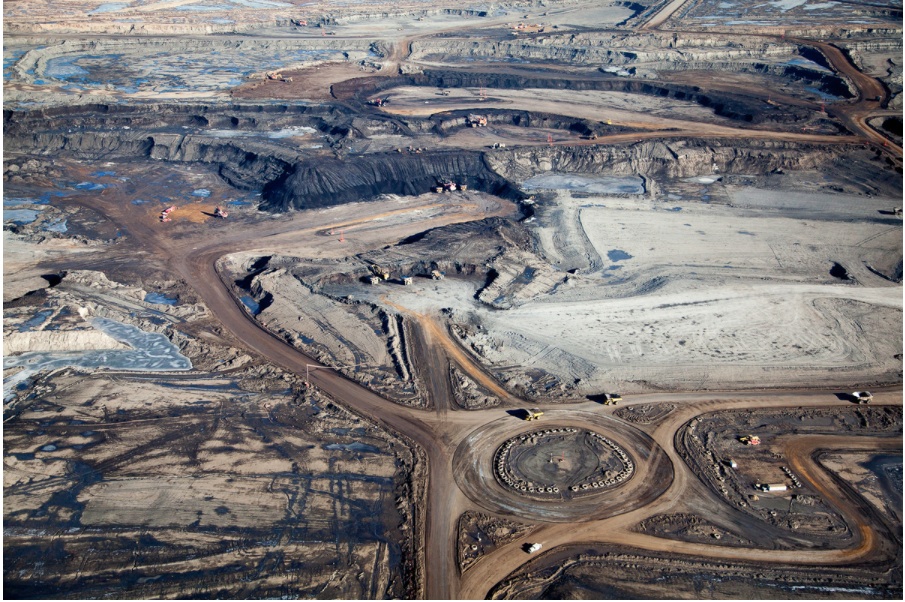
Any argument that Canada’s oil can be sustainably extracted doesn’t line up with the geography facts that it will ALWAYS be some of the dirtiest oil in the world. The Canadian Association of Petroleum Producers acknowledges that oil sands production requires extensive energy inputs, contributing to high emissions (CAPP, n.d.). Even as efficiency improves, the fundamental nature of bitumen extraction remains environmentally damaging.
The debates on oil sustainability leading to the gradual market shift is not a sudden movement, instead, it has started over the previous decades particularly after the oil crisis and global economic recession of 2008. While the theories on ESG disclosures started to gain widespread attention and acknowledgement, Doni et al., (2025) have examined the relationship between ESG disclosure and financial performance in European-listed large oil and gas companies from 2010-2014, prior to the enforcement of EU Directive 95/2014 on non-financial disclosure. The findings show that financial performance, particularly corporate profitability and financial autonomy, positively influences ESG disclosure. This suggests that companies with stronger financial standing are more likely to engage in ESG reporting, reinforcing the effectiveness of EU regulatory initiatives. So, while Canadian oil companies promote their ESG efforts, the actual environmental and social costs remain high; way too high.
It is Dirty Oil; Really Dirty Oil
The Canadian oil and gas is dirty and will still be dirty even if it is heavily regulated and is put in east-west pipes or north-south pipes. While regulatory efforts and technological advancements will make some headway to reduce emissions intensity, total emissions will not come down because there is a commitment to allowing for increased production.
The good news for the air is that the economic viability of the oil sands is waning, driven by global market shifts, regulatory pressures, and technological advancements in renewable energy.
Given the long-term trend toward decarbonization, Canada will ultimately have to critically reassess its reliance on oil sands production and – long after the tariff threats – and invest more heavily in cleaner alternatives. Without genuine commitment to absolute production reductions rather than relative intensity improvements, Canada’s overall emissions reduction goals are a lost cause.
References
Belot, R. (2025, February 14). Why Canada’s Oil Sands Aren’t Coming Back. Macleans.Ca. https://macleans.ca/economy/why-canadas-oil-sands-arent-coming-back/
CAPP. (n.d.). Oil and Natural Gas 101. CAPP | A Unified Voice for Canada’s Upstream Oil and Gas Industry. Retrieved February 22, 2025, from https://www.capp.ca/en/oil-natural-gas-you/oil-natural-gas-canada/
Doni, F., Corvino, A., & Martini, S. B. (2025). ESG disclosure and financial performance in the European oil and gas industry. International Journal of Business Environment, 16(1), 39–61. https://doi.org/10.1504/IJBE.2025.143097
Exner-Pirot, H., & McKenzie, J. (2023, April 1). Is Alberta Oil Ethical? Alberta Views. https://albertaviews.ca/is-alberta-oil-ethical/
Gorski, J., & McKenzie, J. (2022). Decarbonizing Canada’s oil and gas supply. Pembina Institute. https://www.pembina.org/pub/decarbonizing-canadas-oil-gas-supply
Government of Canada. (2023, December 7). Regulatory Framework for an Oil and Gas Sector Greenhouse Gas Emissions Cap [Regulations;consultations]. Government of Canada. https://www.canada.ca/en/services/environment/weather/climatechange/climate-plan/oil-gas-emissions-cap/regulatory-framework.html
Government of Canada, P. W. and G. S. C. (2024, November 9). Canada Gazette, Part 1, Volume 158, Number 45: Oil and Gas Sector Greenhouse Gas Emissions Cap Regulations. Government of Canada, Public Works and Government Services Canada, Integrated Services Branch, Canada Gazette. https://canadagazette.gc.ca/rp-pr/p1/2024/2024-11-09/html/reg1-eng.html
IEA. (2022). Canada—Countries & Regions. IEA. https://www.iea.org/countries/canada/oil
Montgomery, J., Mahoney, C., Nasr, M., & Cobbaert, D. (2025). The Extent of Anthropogenic Disturbance on Wetland Area in the Oil Sands Region of Alberta, Canada Between 2000 and 2018. Land, 14(2), 336. https://doi.org/10.3390/land14020336
Sanschagrin, J. (2014). Is Ethical Oil Really Ethical? A case study of the Alberta oil sands and related environmental challenges. https://doi.org/10.13140/RG.2.2.19445.19689